|
Japan’s revised Patent Examination Guidelines took effect on July 1, 2026.
The revision spans a number of issues, but this article addresses only the two points most important in day-to-day practice: inventive step and disclaimers (“excluding claims”).
1. Inventive Step: Broader Problem-Framing and Weighted Obstructive Factors
The revised guidelines explicitly state that Examiners are not strictly bound by the problem explicitly stated in a citation. Examiners may also consider:
- Problems that are obvious to the skilled person, or
- Problems readily conceived from common technical knowledge.
This expanded approach increases the likelihood that Examiners will find a motivation to combine or modify prior art.
The revision also confirms that an obstructive factor, similar to the U.S. concept of “teaching away”, is not decisive on its own. It is weighed against the motivation or design change that supports the rejection, and the outcome depends on its strength.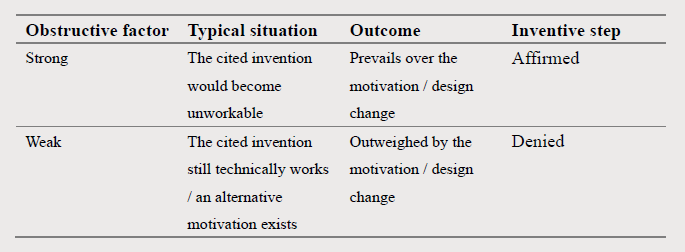
2. Disclaimers: Higher New-Matter Hurdle
The same new-matter standard still applies to disclaimers as to any other amendment: no introduction of new technical matter (Solder Resist IP High Court Grand Panel decision, 2008).
In practice, however, the JPO has tightened its application. A statement that the amendment “merely removes the overlap with a cited invention” no longer suffices. The applicant is expected to proactively explain why the amendment does not introduce new technical matter in relation to the original disclosure. Indeed, an increasing number of new-matter rejections have recently been issued for disclaimers.
When a disclaimer is used to argue inventive step, in particular by excluding subject matter close to the concept of the present invention, the risk of rejection has materially increased. In contrast, the following is relatively low risk:
- Excluding accidental overlap: Where the cited prior art is so technically different that it was never contemplated as part of the claimed invention as of the filing date.
- Disclaimers for Article 39 (double patenting) or Article 29bis (secret prior art): Amendments that merely remove overlap with a prior application typically do not add new matter, according to the JPO’s reply to the public comments.
3. Practical takeaways
Where it is possible, the applicant should include intermediate concepts and fallback positions in the specification as filed, so that a claim can be narrowed by a positive limitation rather than by a disclaimer.
When a disclaimer is necessary, the applicant should present substantive arguments in detail in the Remarks that the disclaimers do not introduce new technical matter.
Regarding the future of disclaimers, we should closely monitor further case law.
For the full text of the revised Guidelines, please refer to the JPO’s official notice:
https://www.jpo.go.jp/system/laws/rule/guideline/patent/tukujitu_kijun/kaitei2/r8_shinsa_kijun_kaitei.html

| We send newsletters and webinar invitations by email periodically. If you would like to receive this information, please subscribe by completing the form, or follow our official LinkedIn page. |