|
Legal Basis
Article 36, Paragraph 6, Number 2 of the Japanese Patent Law stipulates that a claimed invention shall be clear.
The JPO Examination Guidelines specify that claims must be drafted such that a skilled person can determine whether a specific product or process falls within the claimed scope.
Examples of Potentially Problematic Expressions
Below is a summary of expressions that likely lead to lack of clarity during JPO examinations.
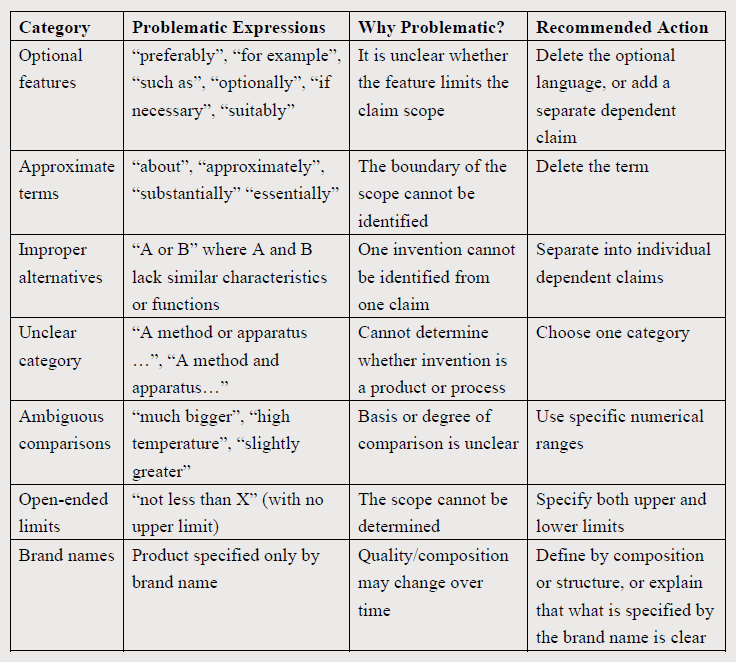
Of course, if the Examiner determines that the above expressions do not render the claimed invention unclear in the context of the specification and common general knowledge, no rejection will be issued.
The Examination Guidelines explicitly state that Examiners should not immediately conclude that the scope is unclear simply because a claim contains potentially ambiguous language.
However, in practice, not a few JPO Examiners issue formal clarity rejections whenever claims contain these expressions, often without substantive analysis of whether the scope is actually unclear in context.

| We send newsletters and webinar invitations by email periodically. If you would like to receive this information, please subscribe by completing the form, or follow our official LinkedIn page. |